
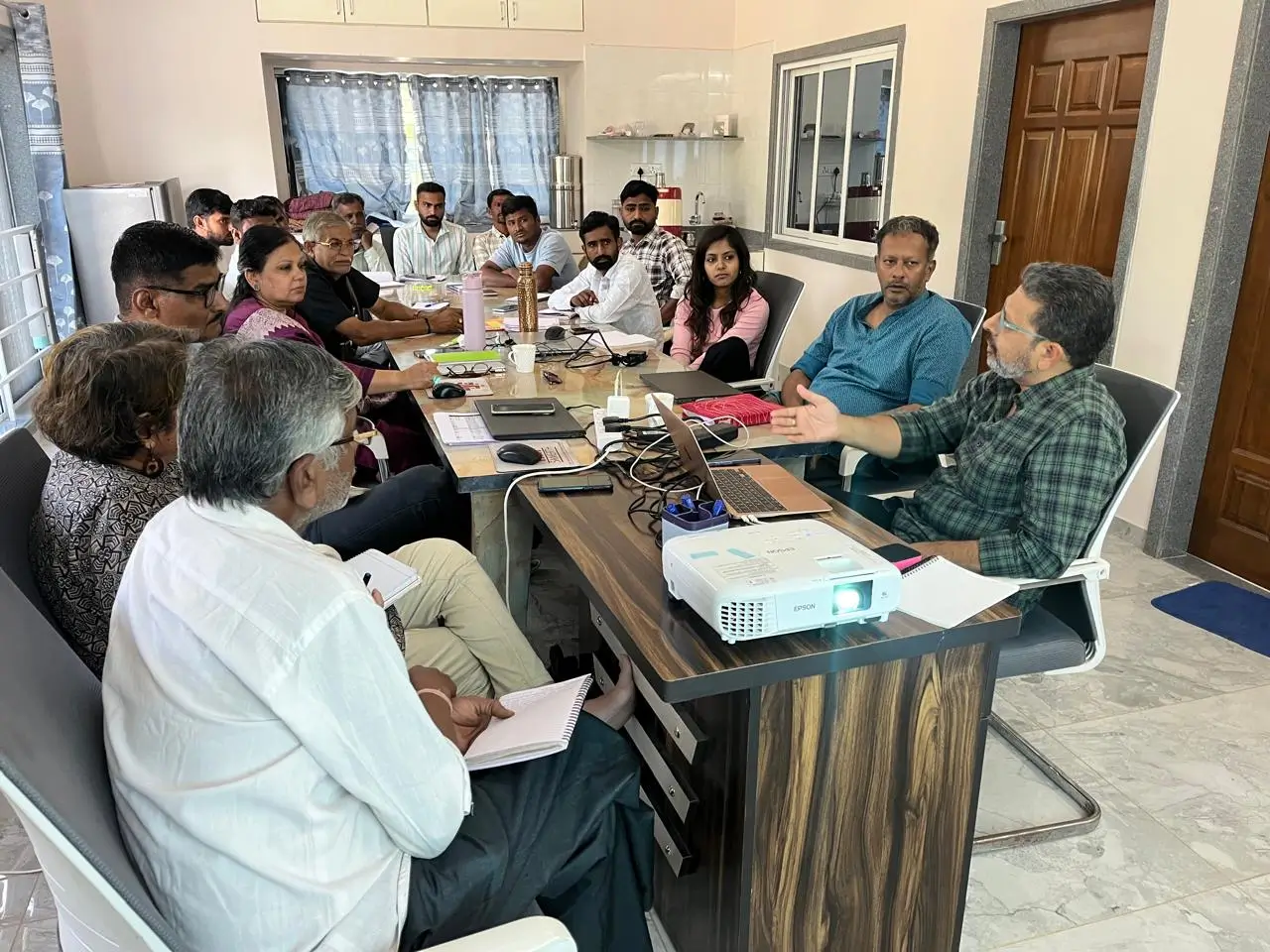
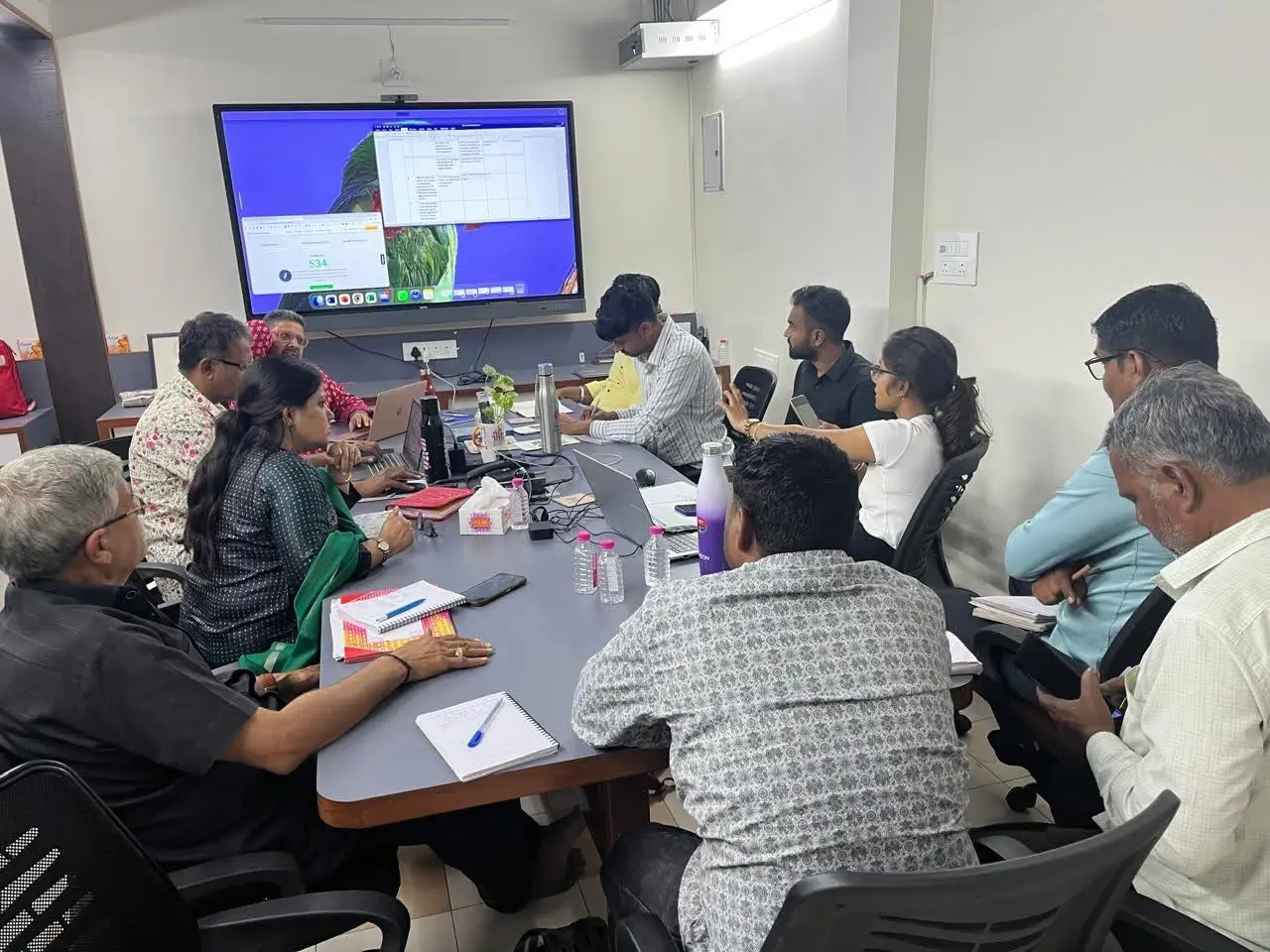
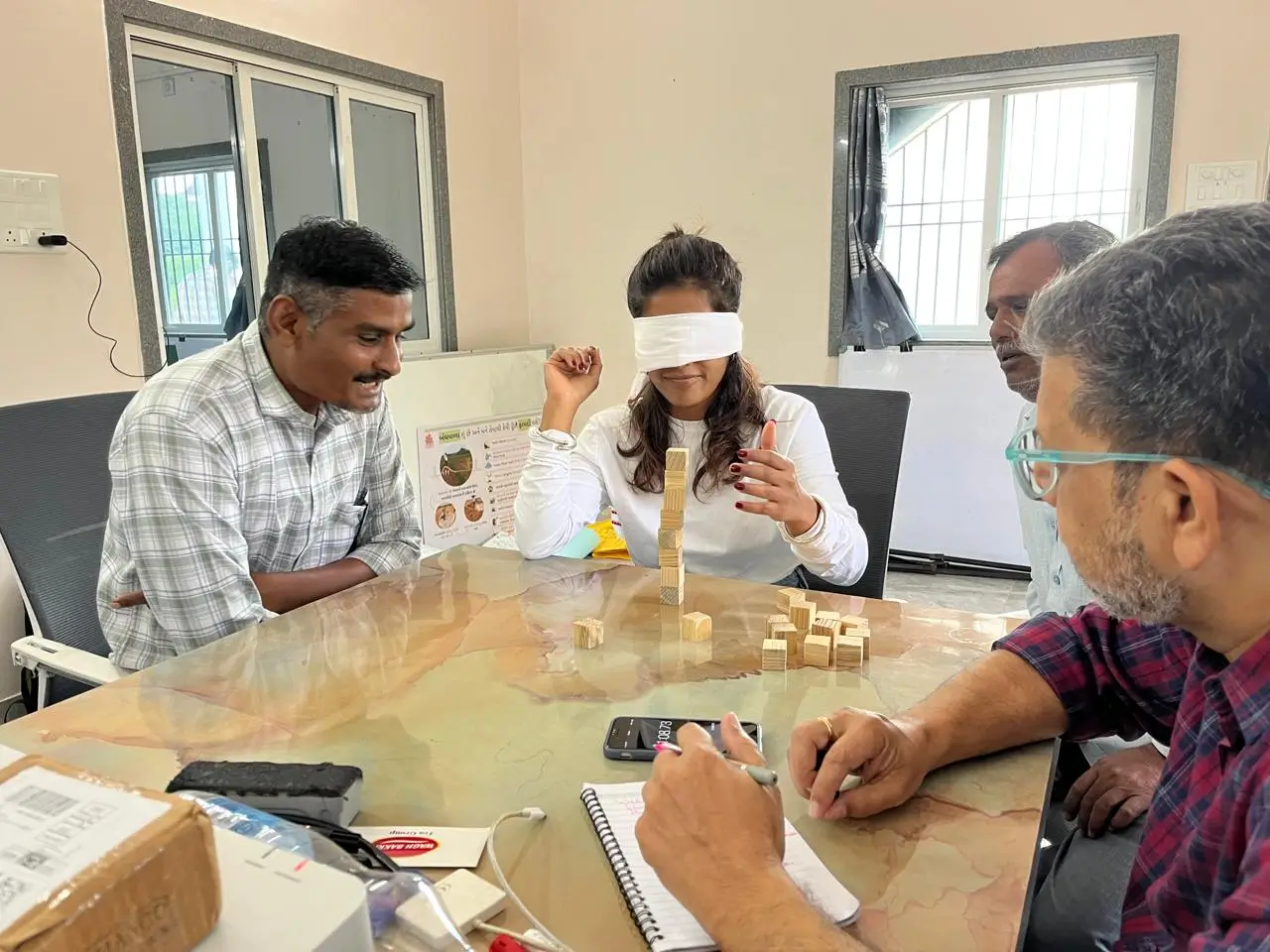
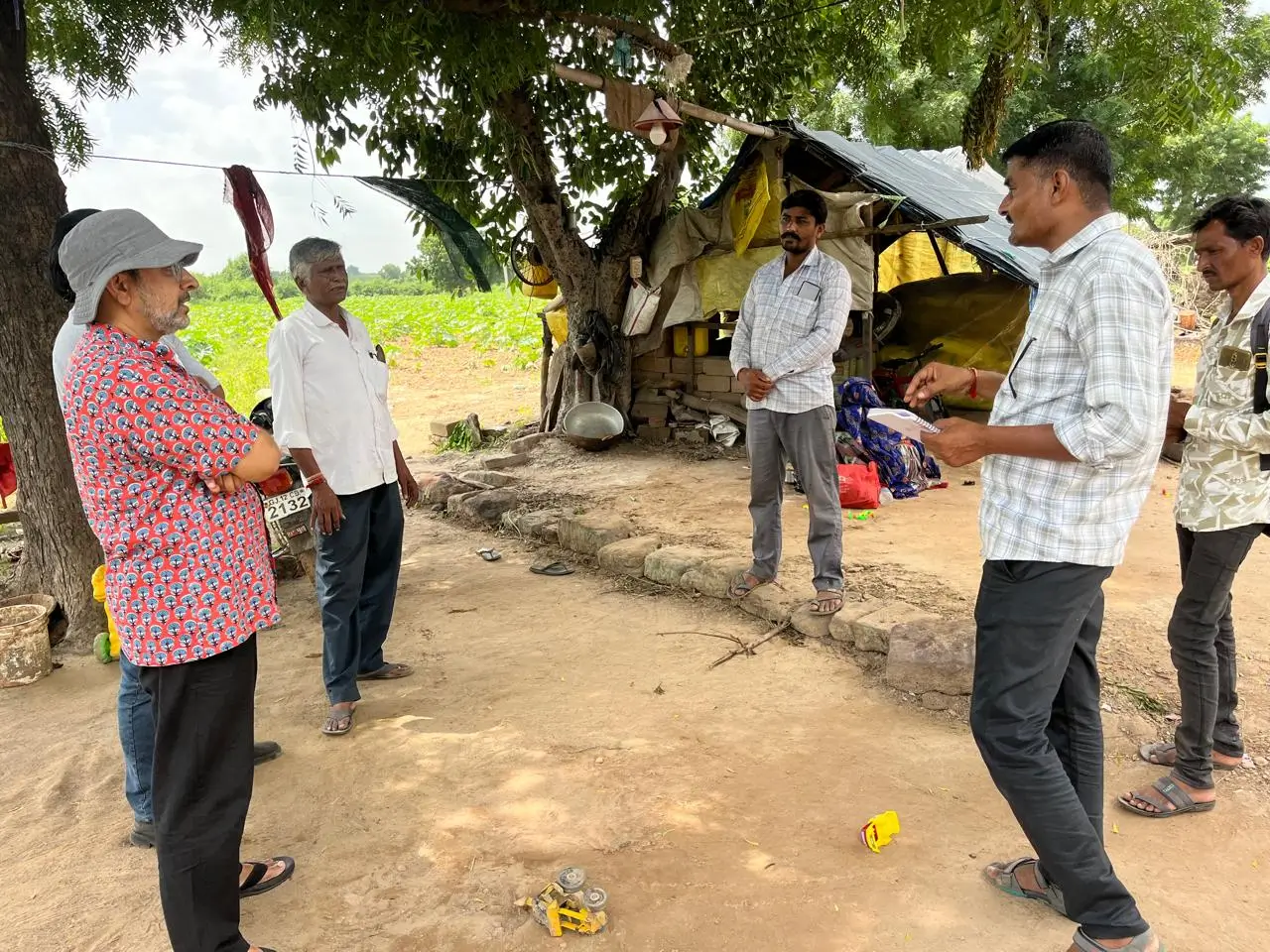
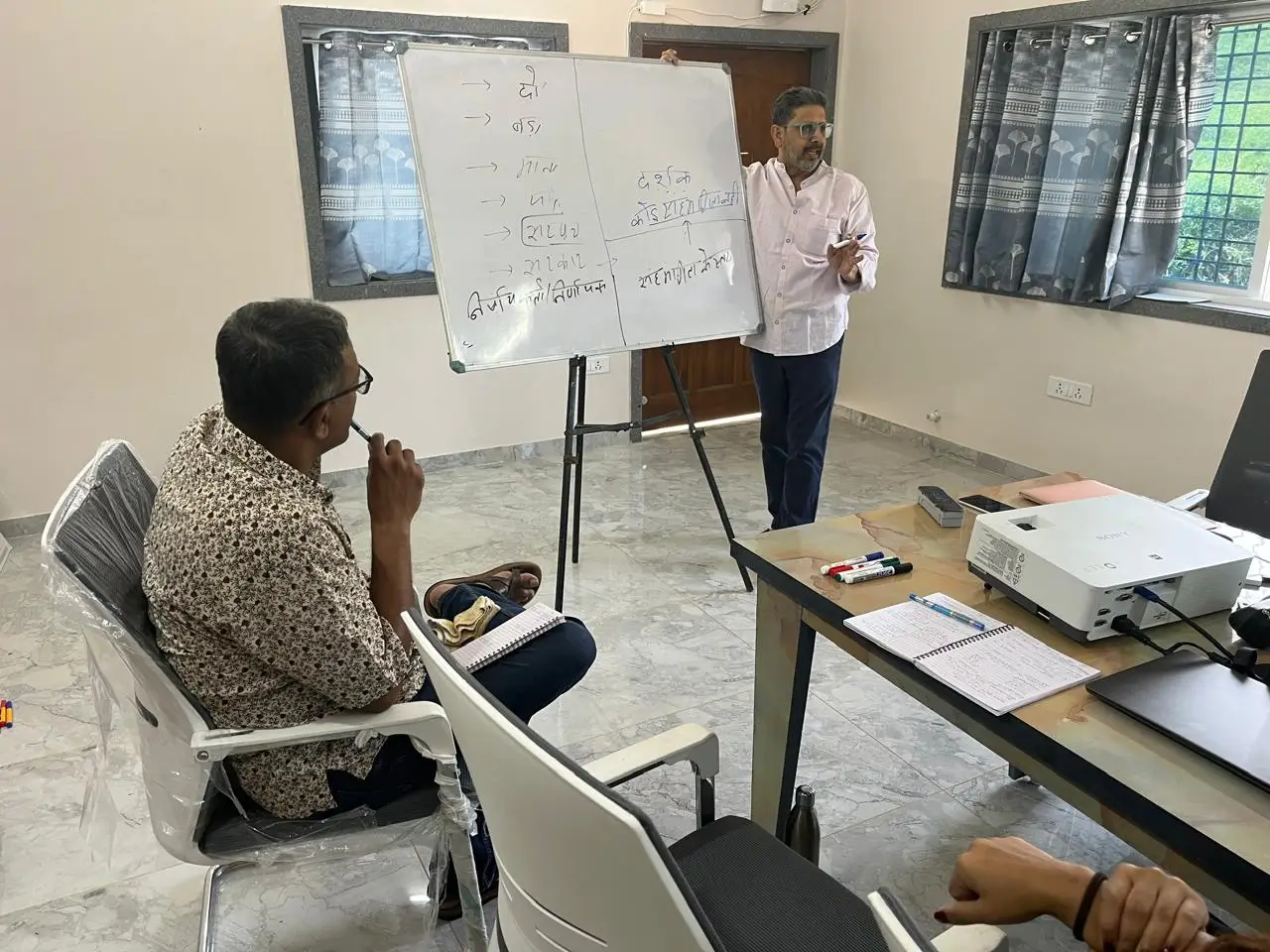
Samerth recently organised a comprehensive Results-Based Management (RBM) training for the Kutch team, facilitated by Mr. Khilesh Chaturvedi, Advisor, Trainer, and Evaluator for organisations working with marginalised communities. The training was designed and delivered in structured modules, enabling the team to gradually deepen their conceptual and practical understanding of results-driven programming.
The initial modules focused on building clarity around different levels of results—outputs, use of outputs, outcome and long-term impact. Through practical exercises and contextual examples, the team reflected on how programme activities must align with clearly defined outcomes rather than remain limited to activity completion. This process enabled field staff to visualise their work not merely as a set of tasks, but as a pathway toward measurable and meaningful change in the lives of communities.
Subsequent sessions concentrated on developing measurable indicators and designing appropriate monitoring tools to track progress against defined outcomes. The team learned how to translate programme intentions into clear, assessable indicators and how to gather evidence systematically. This strengthened their ability to document progress with data and articulate programme effectiveness based on tangible results rather than the number of activities conducted.

Recognising that sustainable development depends on community ownership, a dedicated module focused on the principles of community-led development. Through role plays, case studies, and participatory exercises, our team explored how fostering accountability, local leadership, and collective responsibility ensures long-term sustainability of interventions.
The final module took a forward-looking approach, supporting the team in refining Samerth’s seven-year programmatic vision. Mr. Chaturvedi facilitated the process of sharpening outcomes, strengthening indicator frameworks, and designing robust monitoring systems aligned with the organisation’s long-term strategy.
Overall, the training reinforced a critical shift in perspective—from reporting activities to demonstrating impact. Results-Based Management enables Samerth to speak about its work with clarity, evidence, and data, ensuring that programmes remain outcome-focused, accountable, and grounded in measurable change for marginalised communities.

Registered in 1992 under the Bombay Public Trust Act 1950, Trust registration no. E-9150/Ahmedabad, Samerth Charitable Trust is a non-governmental, non-profit organisation. Samerth Charitable Trust is registered u/s 12AA and u/s 80G of the Income Tax Act, 1961.
Please note that PAN is necessary to avail 50% tax exemption receipt for a donation
Copyright © 2019 Samerth Trust. All Rights Reserved.
Created by Episkope.
